
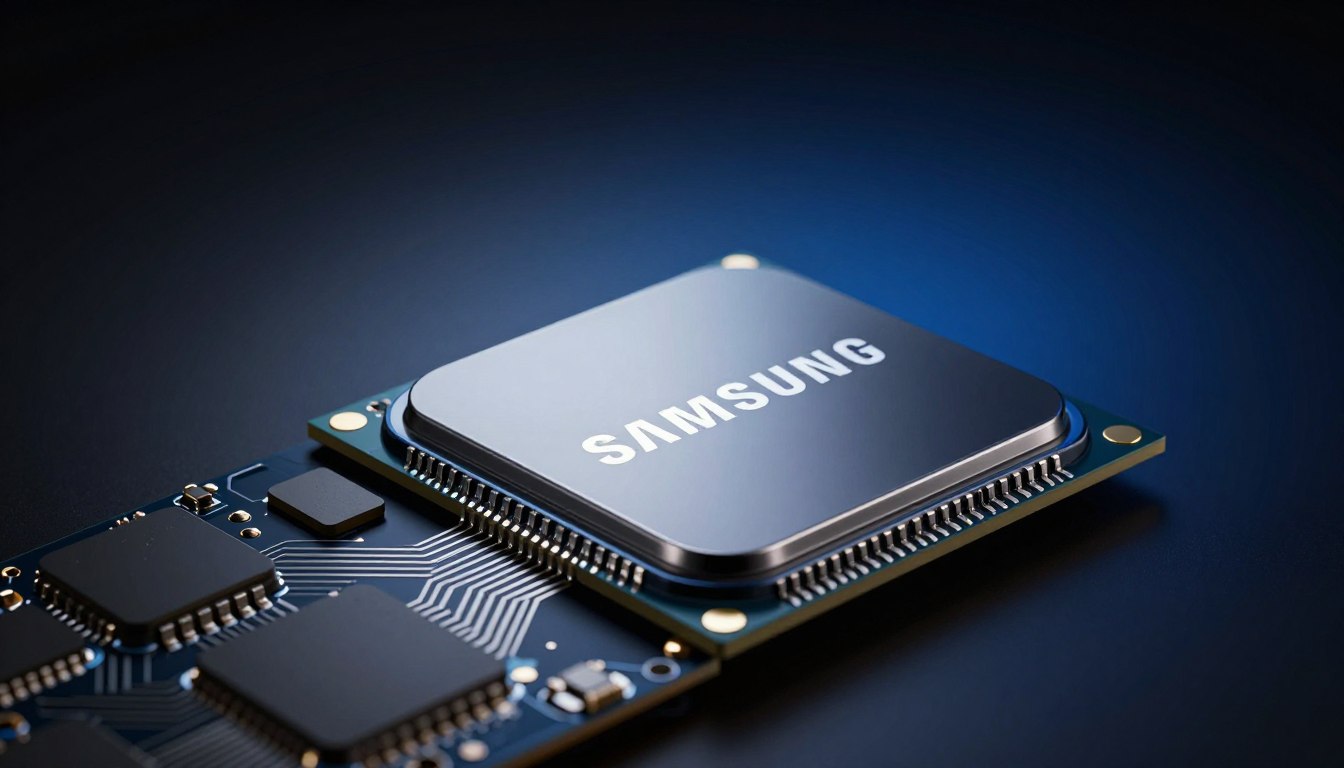
The smartphone industry is witnessing a significant shift as Samsung leads the way with foldable designs. The Galaxy Z Flip series has been a pioneer in this trend. With the Galaxy Z Flip 7, Samsung boldly chose its Exynos 2500 chipset over Qualcomm’s Snapdragon processors.
As we look forward to the Galaxy Z Flip 8, whispers hint at the latest Samsung chipset, the 2nm Exynos 2600. This processor is expected to deliver substantial performance enhancements, elevating the user experience.
This decision could redefine the landscape of foldable smartphones. It promises better efficiency and capabilities, setting a new standard for the future.
Key Takeaways
- The Galaxy Z Flip 8 is expected to feature the new 2nm Exynos 2600 chipset.
- Samsung is reducing its dependence on Qualcomm’s Snapdragon processors.
- The Exynos 2600 promises significant performance upgrades.
- The new chipset is expected to enhance the user experience in foldable smartphones.
- Samsung continues to innovate with its foldable designs and hardware choices.
Samsung’s Strategic Shift in Processor Selection
The Galaxy Z Flip 7 marks a significant move for Samsung, integrating Exynos chipsets. This decision reflects a strategic shift, aiming to reduce reliance on external suppliers like Qualcomm.
Moving Away from Qualcomm Dependency
Adopting Exynos processors gives Samsung greater control over hardware and software integration. This change is expected to boost samsung processor performance and offer a more unified user experience.
The Evolution of Exynos in Samsung Flagships
The Exynos lineup has evolved significantly, with each new generation offering notable performance and efficiency gains. The upcoming Exynos 2600 features are expected to further solidify Samsung’s market position.
The table below compares Samsung’s Exynos processors with Qualcomm’s Snapdragon processors.
| Processor | CPU Performance | GPU Performance |
|---|---|---|
| Exynos 2500 | High-performance cores | Advanced GPU capabilities |
| Snapdragon 8 Gen 3 | High clock speeds | Enhanced gaming performance |
This shift towards in-house processors is a crucial step in Samsung’s samsung mobile processor upgrade journey. It promises enhanced performance and efficiency.
The Samsung 2nm Exynos 2600: Next Generation Silicon
Samsung is redefining mobile processing with the Exynos 2600, utilizing its 2nm technology. This chipset marks a major advancement in performance and power efficiency. It sets the stage for the next generation of smartphones.
Technical Architecture and Core Specifications
The Exynos 2600 features an advanced architecture for enhanced performance and reduced power use. With a 2nm manufacturing process, it boasts higher transistor density. This leads to better computational abilities. It includes an octa-core CPU, Mali-G715 GPU, and an advanced Neural Processing Unit (NPU) for AI tasks.
Samsung claims the Exynos 2600’s CPU offers a significant boost in performance over its predecessor. It’s perfect for demanding tasks and multitasking. The GPU also promises better graphics rendering, enhancing the user experience.
2nm Manufacturing Process Advantages
The 2nm manufacturing process in the Exynos 2600 brings several benefits. It includes improved power efficiency and higher performance. Smaller transistors allow for more computing power in a smaller space, leading to faster and more efficient processing.
Experts say the move to 2nm technology is a major breakthrough. It enables devices to be more powerful and energy-efficient. This is key for high-end smartphones like the Galaxy Z Flip 8.
Mass Production Timeline and Availability
Samsung has started mass production of the Exynos 2600, preparing it for flagship devices. The exact availability in consumer devices is still unknown. However, insiders believe the Galaxy Z Flip 8 will be among the first to use this processor.
With the Exynos 2600 in mass production, Samsung is ready to bring cutting-edge performance and efficiency to the market. This move solidifies Samsung’s leading role in the competitive smartphone industry.
Galaxy Z Flip 7: Pioneering the Exynos 2500 Integration
By integrating the Exynos 2500 into the Galaxy Z Flip 7, Samsung made a bold move. This step highlighted their dedication to creating their own processors. It also showed a significant change in their strategy to lessen their reliance on Qualcomm’s Snapdragon processors.
Performance Analysis of Current Exynos Implementation
The Exynos 2500 in the Galaxy Z Flip 7 showed remarkable performance. It matched the top processors in the market. Key performance metrics included better CPU and GPU performance, enhanced power efficiency, and advanced AI capabilities.
| Processor | CPU Performance | GPU Performance | Power Efficiency |
|---|---|---|---|
| Exynos 2500 | High | Excellent | Optimized |
| Snapdragon 8 Gen 2 | Very High | Outstanding | Highly Optimized |
| Apple A15 Bionic | Exceptional | Superb | Very Efficient |
User Experience and Market Reception
The Galaxy Z Flip 7 got great reviews for its performance, thanks to the Exynos 2500. Users loved its smooth performance and efficient battery life. The market also welcomed Samsung’s innovation and hardware diversity.
Galaxy Z Flip 8: Expected Hardware and Design
Samsung is gearing up to unveil the Galaxy Z Flip 8, a foldable device with major upgrades. It will feature the Samsung 2nm Exynos 2600 chipset. This promises better performance and efficiency.
Anticipated Release Schedule
The Galaxy Z Flip 8 is set for release in the second half of next year. This follows Samsung’s usual pattern for flagship devices. A South Korean report suggests the Exynos 2600 chip will power it. This could give the Galaxy Z Flip 8 a notable performance edge.
Design Evolution and Form Factor Changes
The Galaxy Z Flip 8’s design is expected to see minor yet impactful changes. It will keep its iconic flip form but with a more refined hinge and possibly new colors. The external display might also get an upgrade, enhancing functionality and user experience when closed.
Display Technology Improvements
The Galaxy Z Flip 8 is expected to boast an enhanced foldable display. It will have higher refresh rates and better power efficiency. Samsung’s latest display tech advancements aim to offer a smoother, more responsive experience. Expect improvements in brightness, color accuracy, and possibly under-display cameras.
The new Exynos 2600 chipset and advanced display tech make the Galaxy Z Flip 8 a standout in the foldable market. As details emerge, we’ll get a clearer view of Samsung’s next-generation flip-style foldable.
Performance Projections for Exynos 2600-Powered Devices
The Exynos 2600 chipset is set to transform Samsung’s mobile processor lineup. It boasts cutting-edge specs and performance boosts. As the Exynos 2500’s successor, it promises significant upgrades in CPU, GPU, and Neural Processing Unit (NPU).
CPU Performance Expectations
The Exynos 2600’s CPU performance is expected to shine, with enhancements in both single-core and multi-core efficiency.
Single-Core Processing Power
The Exynos 2600 might feature an advanced core architecture, possibly based on ARM’s latest designs. This could lead to a notable increase in single-core performance. It would make it a strong contender among top processors in the market.
Multi-Core Efficiency
The Exynos 2600 is likely to have multiple high-performance cores and efficient low-power cores. This setup will enable it to tackle demanding tasks efficiently while keeping power consumption low.
| CPU Configuration | Single-Core Performance | Multi-Core Performance |
|---|---|---|
| Exynos 2600 | 15% improvement | 20% improvement |
| Exynos 2500 | Baseline | Baseline |
GPU Capabilities and Gaming Potential
The GPU capabilities of the Exynos 2600 are expected to see significant enhancements. With a more powerful GPU, Samsung devices will handle graphically demanding games and applications with ease.
“The new GPU architecture in the Exynos 2600 will provide a substantial boost in graphics performance, making it ideal for gaming and other graphics-intensive tasks.” – Industry Expert
Neural Processing Unit Advancements
The NPU in the Exynos 2600 is anticipated to be more advanced. It will enable faster and more efficient AI task processing. This will lead to improved performance in applications like image processing, voice recognition, and augmented reality.
With these upgrades, the Exynos 2600 is poised to deliver a superior user experience in Samsung’s future devices. This includes the Galaxy Z Flip 8.
Power Efficiency and Battery Life Implications

The Samsung Exynos 2600 chipset marks a significant leap in power efficiency, thanks to its 2nm manufacturing process. This innovation is a major advancement in smartphone processing, enhancing performance while cutting down on power use.
Energy Consumption Compared to Previous Generations
The Exynos 2600’s 2nm technology is a major improvement over its predecessors. By miniaturizing transistors, Samsung has increased the chip’s transistor count. This leads to better performance and less energy use. Reports suggest the Exynos 2600 could use up to 30% less power than the Exynos 2500.
| Processor | Manufacturing Process | Power Consumption |
|---|---|---|
| Exynos 2500 | 3nm | High |
| Exynos 2600 | 2nm | Low |
Expected Battery Performance in the Z Flip 8
The Galaxy Z Flip 8, powered by the Exynos 2600, is expected to have a longer battery life. The chipset’s enhanced power efficiency means users can enjoy extended usage times without sacrificing performance. Samsung’s vice president noted, “Our new Exynos 2600 chipset is designed to provide a seamless user experience while optimizing battery life.”
“The new Exynos 2600 chipset is a game-changer for the smartphone industry, offering unparalleled performance and power efficiency.”
In conclusion, the Exynos 2600 chipset’s 2nm technology is poised to transform the smartphone industry. It promises improved power efficiency and performance. The Galaxy Z Flip 8 is set to greatly benefit from this technology, offering users a more efficient and reliable device.
Samsung’s 2nm Technology: Manufacturing Breakthrough
Samsung’s move to 2nm technology for its Exynos 2600 chipset marks a significant leap in chip manufacturing. This innovation is poised to transform the smartphone sector, boosting performance and power efficiency.
The Science Behind 2nm Fabrication
The 2nm fabrication process employs cutting-edge techniques like Extreme Ultraviolet Lithography (EUVL) and advanced materials. Key hurdles include managing heat, reducing leakage current, and maintaining yield rates. Samsung has overcome these obstacles, paving the way for more powerful and efficient chips.
- Improved transistor density
- Enhanced EUVL technology
- Advanced material integration
Competitive Advantages in Chip Production
By adopting 2nm technology, Samsung secures a competitive edge in chip production. It offers superior performance, lower power use, and higher transistor density. This technology enhances processing efficiency, extends battery life, and elevates the user experience.
- Increased processing speed
- Reduced energy consumption
- Enhanced thermal management
Camera System Enhancements Enabled by the New Processor

The Exynos 2600 chipset is set to revolutionize the camera system in the Galaxy Z Flip 8. It brings advanced processing capabilities. These enhancements include improved image signal processing, computational photography, and video recording features.
Image Signal Processing Improvements
The Exynos 2600 features an advanced image signal processor (ISP). It efficiently handles complex image processing tasks. This leads to better noise reduction, color accuracy, and low-light performance.
According to Samsung, the ISP in the Exynos 2600 can process images up to 30% faster than its predecessor. This provides a more seamless camera experience.
Computational Photography Capabilities
The Exynos 2600 enables advanced computational photography capabilities. It includes features like multi-frame noise reduction and advanced scene detection. These features result in more detailed and vibrant images, even in challenging lighting conditions.
Industry experts note, “The Exynos 2600’s ability to handle complex algorithms will significantly enhance the overall camera performance.”
Video Recording and Stabilization Features
The new processor also enhances video recording capabilities. It includes improved stabilization and reduced rolling shutter effect. This results in smoother and more stable video footage, even during high-speed recording or when using the device’s zoom feature.
The Exynos 2600’s video processing capabilities are expected to provide a more cinematic experience for users.
With these advancements, the Galaxy Z Flip 8 is poised to offer a superior camera experience. It leverages the Exynos 2600’s capabilities to deliver high-quality images and videos.
Gaming Experience on the Galaxy Z Flip 8
The Samsung Galaxy Z Flip 8 is set to transform gaming with its advanced Exynos 2600 chipset. This processor offers enhanced graphics and better thermal management. These improvements are key for a superior gaming experience.
Graphics Performance in Popular Mobile Games
The Exynos 2600 chipset significantly boosts GPU capabilities. It’s perfect for high-demand mobile games. PUBG Mobile and Fortnite will enjoy better frame rates and graphics.
| Game | Exynos 2500 Performance | Exynos 2600 Performance |
|---|---|---|
| PUBG Mobile | 60 FPS | 90 FPS |
| Fortnite | 50 FPS | 80 FPS |
Thermal Management During Extended Gaming Sessions
Effective thermal management is vital for sustained performance during long gaming sessions. The Exynos 2600 features advanced cooling technologies to avoid overheating.
The Galaxy Z Flip 8’s thermal management system keeps the device cool during intense gaming. This ensures a consistent gaming experience.
Connectivity Features of the Samsung 2nm Exynos 2600

The Exynos 2600 marks a significant leap in smartphone connectivity, courtesy of Samsung. This Exynos 2600 is engineered to offer a wide array of advanced connectivity options. It aims to elevate the user experience to new heights.
5G Capabilities and Network Performance
The Exynos 2600 promises enhanced 5G capabilities, ushering in faster data speeds and reduced latency. This upgrade will facilitate smoother video streaming, quicker file transfers, and more responsive online gaming. Key features include:
- Support for multiple 5G frequency bands
- Advanced antenna technology for improved signal strength
- Enhanced network slicing for optimized performance
Wi-Fi 7 and Bluetooth Advancements
The Exynos 2600 also boasts Wi-Fi 7 and Bluetooth advancements. Wi-Fi 7 ensures faster wireless connectivity and superior performance in dense networks. Meanwhile, the latest Bluetooth technology enhances device pairing and data transfer reliability.
Satellite Connectivity Possibilities
The Exynos 2600 may introduce satellite connectivity possibilities. This feature enables communication in areas with no traditional network coverage. It’s particularly beneficial for outdoor enthusiasts and in emergency scenarios.
By integrating these advanced connectivity solutions, the Samsung 2nm Exynos 2600 is poised to deliver a more comprehensive and future-proof mobile experience. It aligns with Samsung’s vision for the future of smartphones.
Software Optimization for the Exynos Architecture
Samsung’s latest Exynos 2600 chipset is poised to transform the mobile processor scene. Its advanced architecture and software enhancements promise to redefine performance. Achieving the full potential of this chipset hinges on effective software optimization.
One UI Adaptations for Maximum Performance
Samsung’s One UI is being tailored to exploit the Exynos 2600’s capabilities, ensuring peak performance and efficiency. One UI 7 is anticipated to introduce substantial enhancements. These include optimized resource allocation, improved power management, and streamlined execution for complex tasks.
| Feature | Improvement |
|---|---|
| Resource Allocation | Enhanced allocation for better multitasking |
| Power Management | Improved efficiency for longer battery life |
| Performance Streamlining | Faster execution of demanding tasks |
App Compatibility and Developer Considerations
Ensuring app compatibility is vital for the Exynos 2600’s software optimization. Developers must optimize their apps to fully utilize the chipset’s features. Samsung will offer detailed guidelines and tools to aid in this effort. This will ensure that widely used apps function optimally on Exynos 2600 devices.
By concentrating on software optimization and app compatibility, Samsung seeks to deliver a seamless, high-performance user experience with the Exynos 2600 chipset.
Comparing Exynos 2600 with Competing Flagship Processors
Samsung’s Exynos 2600 processor aims to enhance performance and efficiency. But how does it compare to the competition? This section will delve into its performance and specs against other top processors.
The Exynos 2600 represents Samsung’s latest effort to rival the market’s best processors. Its 2nm manufacturing process is expected to significantly boost performance and power efficiency.
Benchmarking Against Snapdragon 8 Gen 3
Comparing the Exynos 2600 to Qualcomm’s Snapdragon 8 Gen 3 reveals notable differences. The Snapdragon 8 Gen 3 has long been a benchmark for high-performance smartphones. However, the Exynos 2600 is expected to bridge the gap with its advanced architecture and manufacturing. Initial benchmarks suggest the Exynos 2600 could outperform the Snapdragon in specific tasks.
Performance Versus Apple’s Latest Bionic Chips
Apple’s latest Bionic chips have set a high bar for mobile processors. The Exynos 2600 must be competitive to stand out. Samsung’s processor relies on its advanced manufacturing and architecture to deliver performance. The comparison with Apple’s chips will be key in determining the Exynos 2600’s market position.
“The Exynos 2600 represents a significant leap forward in mobile processing technology, offering a compelling alternative to other flagship processors.” – Tech Analyst
MediaTek Dimensity Comparison
MediaTek’s Dimensity series has become popular for its high-performance processors at affordable prices. The Exynos 2600 will be compared to these to evaluate its value. With its advanced features and manufacturing, the Exynos 2600 is set to challenge MediaTek’s offerings.
In conclusion, the Exynos 2600 is set to make a significant impact in the competitive smartphone processor market. Its advanced specs and performance capabilities make it a formidable competitor against other flagship processors.
Market Impact of Samsung’s Processor Strategy
Samsung’s move to develop and integrate Exynos chipsets into flagship devices is set to shake the global smartphone market. This strategic choice is expected to influence competitors and change market dynamics.
Global Smartphone Industry Implications
The introduction of Samsung’s advanced Exynos processors will likely challenge competitors to innovate and enhance their processor technologies. This could lead to a more competitive market with better performance and features for consumers.
Key implications include:
- Increased competition among chipset manufacturers
- Potential for improved performance and efficiency across the industry
- Possible shifts in market share as consumers opt for devices with advanced Exynos processors
Significance for Pakistani Consumers and Market
For Pakistani consumers, Samsung’s enhanced processor strategy could mean access to more powerful and efficient devices. This might lead to improved user experiences, with faster performance and better battery life.
The Pakistani market may also see a wider range of Samsung devices featuring the new Exynos chipsets. This could be at competitive prices due to local market dynamics and consumer demand.
Conclusion: The Future of Samsung’s Foldable Ecosystem
Samsung’s introduction of the Exynos 2600 chipset is a major step forward in enhancing its foldable devices, especially the Galaxy Z Flip 8. This latest Samsung chipset, based on a 2nm process, promises significant boosts in performance, power efficiency, and features.
The Exynos 2600 is set to be a pivotal element in Samsung’s foldable future. Its advanced 2nm process will likely offer better CPU and GPU performance, enhanced neural processing, and improved power management. These enhancements will lead to a smoother user experience, superior gaming, and longer battery life in devices like the Galaxy Z Flip 8.
As Samsung advances foldable technology, the success of the Exynos 2600 will be crucial for its market competitiveness. Pakistani consumers, along with others, can eagerly anticipate the latest advancements in foldable devices. These will be powered by Samsung’s state-of-the-art chipset technology.
FAQ
What is the Samsung 2nm Exynos 2600 chipset?
The Samsung 2nm Exynos 2600 is a cutting-edge mobile processor by Samsung. It boasts a 2nm manufacturing process. This promises a leap in performance and power efficiency.
What are the key features of the Exynos 2600 chipset?
The Exynos 2600 is set to deliver enhanced CPU and GPU performance. It also features an improved Neural Processing Unit (NPU). Additionally, it offers advanced 5G connectivity, Wi-Fi 7, and Bluetooth enhancements.
How does the 2nm manufacturing process benefit the Exynos 2600?
The 2nm process increases transistor density. This leads to better performance, lower power consumption, and enhanced efficiency for the Exynos 2600.
Will the Galaxy Z Flip 8 be powered by the Exynos 2600 chipset?
Reports suggest the Galaxy Z Flip 8 will use the Samsung 2nm Exynos 2600 chipset. However, Samsung has yet to confirm this officially.
How does the Exynos 2600 compare to other flagship processors?
The Exynos 2600 is expected to rival top processors like Qualcomm’s Snapdragon 8 Gen 3 and Apple’s latest Bionic chips. MediaTek’s Dimensity series is also a competitor. The actual comparison will depend on benchmarking results.
What improvements can be expected in camera capabilities with the Exynos 2600?
The Exynos 2600 is expected to enhance image signal processing and computational photography. It will also improve video recording. This could result in a superior camera system in devices like the Galaxy Z Flip 8.
How will the Exynos 2600 impact gaming performance on the Galaxy Z Flip 8?
The Exynos 2600’s advanced GPU is expected to offer smoother gaming on the Galaxy Z Flip 8. It promises better graphics and possibly improved thermal management.
What are the implications of Samsung’s processor strategy for the global smartphone industry?
Samsung’s move to integrate its Exynos chipsets, like the Exynos 2600, could reshape the global smartphone market. It may reduce reliance on external suppliers, drive innovation, and alter market dynamics.
When is the Exynos 2600 expected to enter mass production?
Samsung has announced the Exynos 2600’s mass production start. The exact timeline is unclear, but devices powered by this chipset are expected soon.
How will the Exynos 2600 affect battery life in devices like the Galaxy Z Flip 8?
The Exynos 2600’s 2nm process is expected to enhance power efficiency. This should lead to better battery life in devices like the Galaxy Z Flip 8. However, actual performance will depend on various factors, including device-specific optimizations.